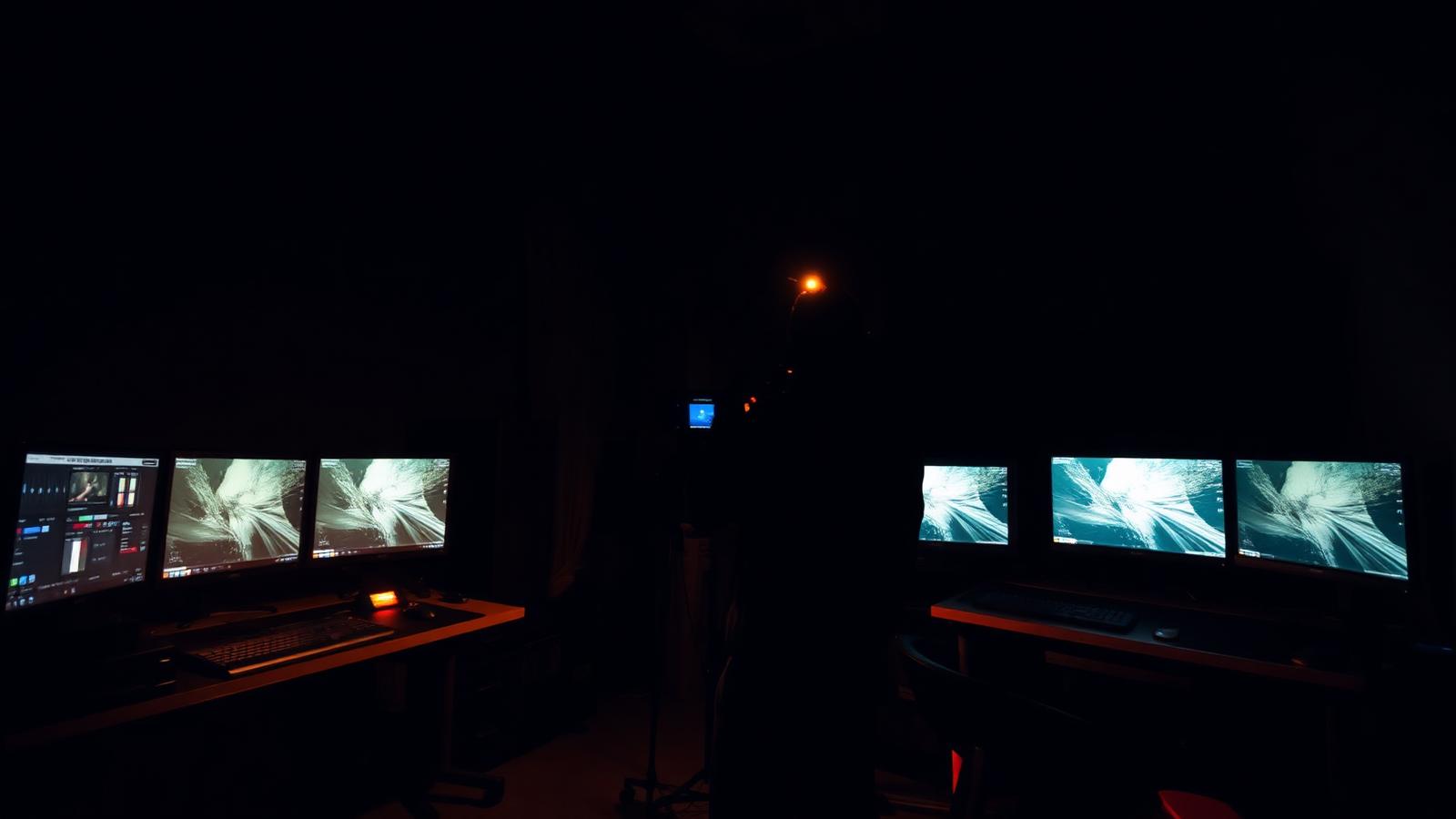

In a small editing studio in Lahore, a young video editor watches as software automatically cuts footage, adds subtitles, removes background noise, and even suggests transitions. What once required hours of manual work can now be completed within minutes. "It's helpful," he says, "but also a little scary."
Artificial Intelligence (AI) is rapidly transforming Pakistan's media and creative industries—from television newsrooms and film production houses to YouTube studios, advertising agencies, and digital marketing companies. With more than 110 million internet users and a rapidly expanding digital ecosystem, Pakistan is entering an era where AI is no longer a futuristic concept; it is becoming part of everyday media production.
But while AI is increasing speed and efficiency, it is also raising serious questions about originality, creativity, job security, and credibility.
One of the biggest concerns highlighted by media experts is that AI is slowly replacing real artists and creative professionals. In creative industries— especially design, illustration, music, filmmaking, and digital art—AI-generated content is becoming more common than human-made work. Today, a person can generate posters, paintings, animations, voiceovers, music videos, and even complete visual campaigns simply by writing prompts into AI software.
Previously, professional designers and illustrators spent years studying design principles, typography, composition, color theory, storytelling, and digital tools. Many completed four-year degrees and built careers through technical expertise and artistic understanding. Now, however, someone with no formal creative education can generate high-quality visuals within seconds using AI image generators.
This shift has created what many experts describe as a "game of money" in the creative field. Instead of investing in trained artists, companies and content creators are increasingly choosing AI tools because they are faster, cheaper, and more convenient. As a result, many skilled artists feel sidelined.
Replication has also become a major issue. AI systems are often trained using references from existing artists, filmmakers, musicians, and designers. By feeding references and prompts into these systems, users can imitate artistic styles without understanding the actual creative process behind them. Critics argue that this reduces art to replication rather than originality.
The music and entertainment industries are facing similar challenges. AI-generated songs, music videos, and voice clones are becoming increasingly common online. While these tools may appear innovative, many artists believe they lack the emotional depth and human essence that come from lived experiences, cultural understanding, and genuine creativity.
At the same time, AI adoption is growing rapidly inside Pakistan's newsrooms and media organizations. Television channels and digital media outlets are using AI-powered systems for headline generation, subtitles, transcription, audience analytics, automated summaries, script assistance, and social media optimization.

ChatGPT
Drafting & summaries

Adobe Firefly
Graphics

Canva AI
Thumbnails

Midjourney
Concept visuals

Runway
Video editing

Descript
Transcription
These technologies are helping organizations reduce costs and accelerate production. Tasks that previously required teams of editors, graphic designers, subtitle writers, and assistant producers can now be completed by fewer people using AI-powered workflows.
Government institutions and technology programs in Pakistan are also encouraging AI adoption. Various initiatives promoting digital literacy, freelancing, women's participation in tech, and AI education are being introduced to prepare young people for the future economy. AI is increasingly being presented as an opportunity for innovation and economic growth.
However, despite these opportunities, concerns about job displacement continue to grow.
In media houses, repetitive and entry-level roles are particularly vulnerable. Junior content writers, transcriptionists, basic editors, voice artists, and graphic assistants may face reduced demand as automation becomes more advanced. Experts warn that younger professionals entering the industry could struggle to compete with companies seeking faster and cheaper AI-generated production methods.
The debate becomes even more complicated in creative fields. In technology-related sectors, AI is often considered justified because automation naturally aligns with data processing, coding assistance, analytics, and workflow optimization.
"It helps me work faster, but sometimes it feels like creativity is becoming less human."
Another major issue raised by experts is misinformation and verification.
As AI-generated content becomes easier to produce, verifying information is becoming increasingly difficult. News organizations are under pressure to publish content quickly, and in some cases, AI-generated material has reportedly been used without proper fact-checking or editorial review. This has led to factual errors, misleading reports, and public criticism.
Several experts pointed out that when media organizations rely too heavily on AI-generated scripts or summaries without human verification, mistakes become inevitable. In some cases, channels and organizations have had to issue public clarifications or apologies after inaccurate AI-assisted reporting damaged their credibility.
This highlights one of the most important responsibilities in modern journalism: verification.
AI can assist with gathering information, organizing research, or generating drafts, but journalists still need to verify facts, cross-check sources, and apply editorial judgment. Human oversight remains essential, especially in current affairs reporting where misinformation can spread rapidly and damage public trust.
Despite these concerns, experts do not believe AI should be completely rejected. Instead, they argue for balanced and ethical usage.
AI can be useful for research assistance, idea generation, editing support, workflow management, accessibility tools, and productivity improvements. It can help creators save time and experiment with new formats. However, the final creative direction, storytelling, interpretation, and ethical decision-making should remain human-driven.
The real danger begins when AI replaces creativity instead of supporting it.
For media students and young professionals, this changing landscape presents both opportunity and pressure. Technical skills alone are no longer enough. The industry now values originality, storytelling ability, critical thinking, ethical journalism, and the capacity to work alongside AI rather than depend entirely on it.
Back in the Lahore studio, the young editor continues his work—this time alongside AI, not completely against it. Yet even he admits the balance feels uncertain.
In the end, AI in Pakistan's media industry is neither purely a threat nor a guaranteed opportunity. It is a turning point. While AI can improve efficiency and open new possibilities, uncontrolled dependence on automation risks weakening originality, artistic identity, and journalistic credibility.
The future may not depend on whether AI is used or not—but on how responsibly, ethically, and creatively people choose to use it.